with Kelly Butler
You might be bewildered by our collective denial of limits; the insistence on endless resources, eternal youth, always more time.
Perhaps you’re one who long suspected that avoidance of endings adds to their burden. Or you’ve experienced a death that was a hollowed-out affair; or worse still, one of great suffering. Intuitively, you knew there could be more than a sterile event absent community or meaning.
You want something better for yourself and your loved ones, and you might even want to provide that care to others.
If this sounds familiar, then know that this program was created for you.
Welcome to the AP Doula.
Next cycle: January 6 to June 16, 2027
Program Overview
The AP in AP Doula stands for advanced practitioner, harkening back to my days of clinical practice. But it’s tongue in cheek; this advanced practice is how to be more deeply human. We can all be AP doulas. While avoiding hierarchies or ranking, this is very different from most doula programs. It’s not a what-to-do checklist, it is culture-making. This poly-scholarship program is designed to cultivate our capacity to stay present and rooted while surrounded by upheaval and uncertainty. We learn skills once passed from hand to hand, without formal training, when companioning the dying was woven into everyday life.
Throughout this course, we explore and recognize our personal views of dying and death, becoming acquainted with mortality – our own and others. Together we work towards understanding the meaning and purpose of dying and death (yes, there is meaning and purpose!), as well as its role in society. We examine dying and death through a variety of epistemological and phenomenological lenses.
The material is delivered by an interdisciplinary team of instructors using mostly live and some asynchronous teaching. You will receive a certificate upon completion (and one of the first things you’ll discover is that you don’t need a certificate).
What You Will Learn
In the AP Doula program, you will learn the essential skills of end-of-life care that complement existing medical services. This includes grief and bereavement support, legacy work, navigating hospice and palliative care, and making arrangements for funeral services or disposition. We cover signs and symptoms of dying; interventions such as music, writing, and psychedelics; important considerations for end-of-life planning; comfort measures; guidance for challenging conversations; creating a supportive environment; and legal considerations.
Drawing from current thanatological research and theory and advocating for evidence-based practice, we examine a variety of religious and cultural traditions to develop a strong foundation for guidance.
And we enter into the liminal space of ending and death; exploring consciousness, philosophy, thresholds; examining the quality of our presence; practicing ritual and ceremony; and integrating an understanding of Death’s place into our daily lives. This is an opportunity to reflect on mortality, identity, and interconnection, and challenge many of the taboos around dying and death.
About Your Teacher
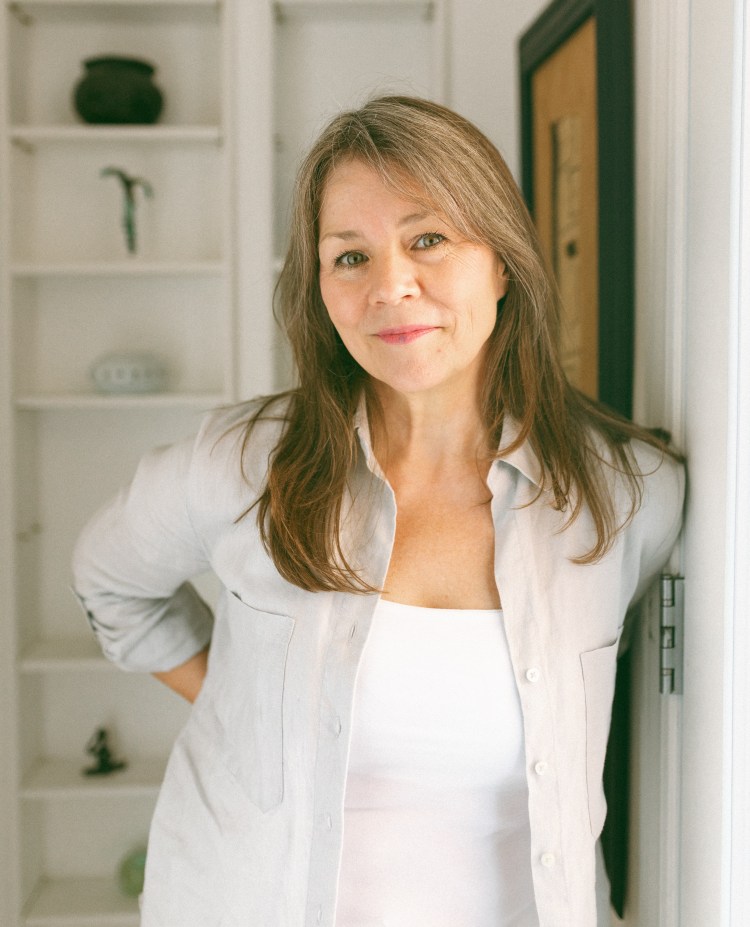
For more than three decades, I’ve walked alongside the dying, tended the dead, and practiced grief’s praisesong. My education includes a Bachelor of Science in Nursing, a Master of Science in Interdisciplinary Health, and my teachers include Dr. Michele Chaban, Francis Weller, Dr. Raywat Deonandan, and Stephen Jenkinson.
Along with clinical training and grief work, I have extensive study in pain care and movement. My work has been in hospice, hospitals, and funeral homes, but my greatest teachers have been the patients and families I’ve had the privilege to serve.
Your Invitation
We are not learning to be tourists in the realm of suffering. We are apprentices to mystery. We can practice dexterity in long silences and hard conversations, be present to pain, open to the unknown. And we are willing to be changed by the intimacy of endings.
Consider this an invitation to deep unlearning. This program is not aimed not towards a destination. Instead, we set out on a lifelong journey.
Schedule
The first implicit lesson is this: Death rarely comes when it’s convenient. To walk alongside endings is to submit to what is, rather than what we wish for. Be assured empathy and flexibility are included in this endeavor – the unexpected will arise. But come to it with an understanding that you will attend class each week, making whatever accommodations necessary in the other corners of your life.
All times are Eastern Standard.

